What's Not Online: The Hidden Archives That Hold Black Family History
There's a quiet assumption that lives inside the way most people approach genealogy research.
It goes something like this: if a record exists, you can find it online. If it isn't there, maybe it was never created in the first place.
For researchers working with African American family history, that assumption is not just incorrect. It can bring an entire research project to a premature stop.
The Gap Is Not Random
The Gap Is Not Random
The digitization of historical records is ongoing, uneven, and shaped by the same inequities that shaped the original creation of those records.
Institutions with resources get digitized.
Well-funded county historical societies, prominent universities, large government archives have the staff, equipment, and grant funding to put their materials online. Smaller institutions, particularly those serving historically under-resourced communities, often don't.
The result is that the records most likely to document Black lives such as records held by HBCUs, historically Black churches, under-resourced county repositories in the rural South, and community organizations in segregated neighborhoods are among the least likely to be found in a keyword search.
We recently worked on a family history project tracing a client's ancestors in a small Illinois town. For the years we were researching, the white high school's yearbooks had been scanned and indexed. They were readily searchable from a desk in Minnesota.
The Black high school's yearbooks from the same town, the same era, were nowhere in any database we could access online.
This is not an oversight. It is a pattern that repeats across record types and regions.
The Problem With Spotty Collections
Even when records are partially digitized, the gaps in those collections create specific research problems for Black families.
City directories, which are useful for tracking annual movement, occupation, and address, were often digitized for the years when they were most heavily used, leaving gaps in the middle decades. For the Illinois research mentioned above, the online collection had a year here, a gap of three or four years, another year. For the white community in that town, those gaps could often be bridged with other sources.
For this family, every missing year was a potential lost thread.
The digitization choices made by institutions aren't malicious, in most cases. They reflect available funding, volunteer capacity, and the priorities of the people who had access to those resources. But the cumulative effect is a digital landscape that reflects old hierarchies about whose history is worth preserving.
If thinking about what lies beyond the databases and who's been left out of them resonates with your own research, you can join my newsletter here.
What Happens When You Pick Up the Phone
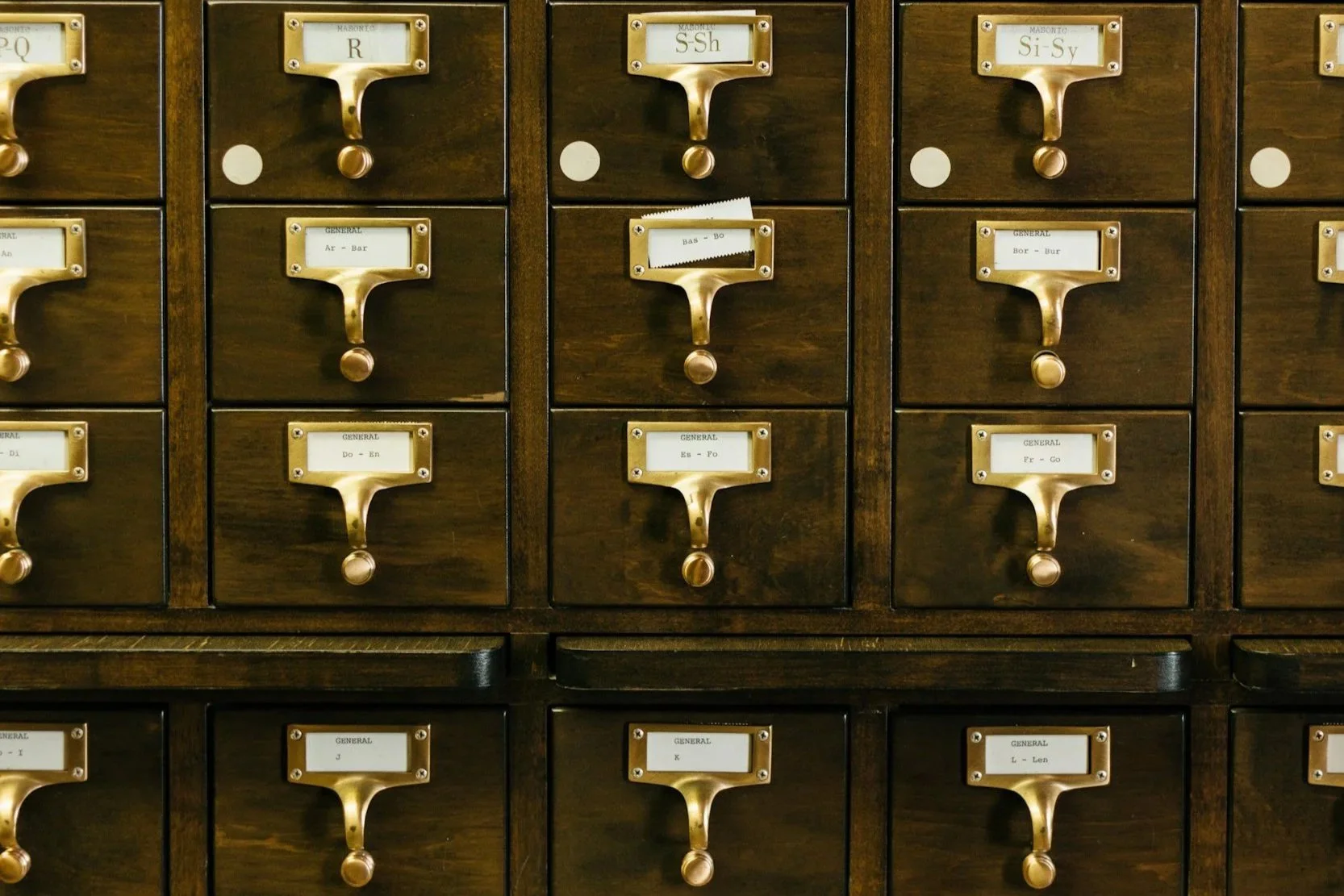
The good news…and there is real good news here… is that the records that aren't online are often still there. They're in filing cabinets, in storage rooms, on shelves in the back of local libraries. They just haven't been moved to the internet yet.
In our research, a phone call to a local public library has turned up physical yearbooks that were never scanned. An email to a county historical society has surfaced city directories for the exact years that were missing from the online collection. A message to a school district has uncovered records nobody had thought to ask for.
This works because local archivists and librarians are, in our experience, genuinely invested in their collections.
They care about the history they're stewarding. And they are often delighted when someone calls about records they've been quietly maintaining for decades without anyone asking about them.
None of it shows up in a keyword search. But all of it might be there.
Institutions Worth Contacting Directly
If you're researching Black ancestry, particularly in small towns, in the South, or in communities where segregation shaped what was documented and what wasn't, these are the types of institutions worth reaching out to directly:
Local public libraries, particularly those with local history or genealogy rooms, often hold materials that were donated by community members and never digitized. If the town had a significant Black population, ask specifically whether the library holds records related to the Black community.
County historical societies, even small ones, often have rich collections that aren't reflected online. They may have yearbooks, city directories, photographs, oral history recordings, or community organization records that could be invaluable.
HBCUs and historically Black churches may hold records of their own communities, such as enrollment records, congregation records, leadership rosters, that are simply not available anywhere else.
Regional and state historical societies sometimes hold materials that local institutions have transferred or donated. If the county historical society doesn't have what you need, the state level is the next call to make.
School districts sometimes retain older administrative records, yearbooks, and photographs that haven't been transferred to any archive. A call to the district office asking about historical records is worth making.
The Physical Record Is Often Still the Best Record
There is real and important work being done to digitize records related to Black history. But we are not there yet. And even when digitization happens, it sometimes introduces new problems: records mislabeled, names misspelled, context stripped away from materials that require it.
The physical record, held by an institution that understands its community's history, is often still the most complete and accurate source available. And the researchers who are willing to go find it, willing to make the phone call, write the email, or travel to the repository, are the ones who find what others miss.
Our ancestors deserve research that goes the extra mile. If you're ready to go beyond what's online and find out what's really out there for your family, we'd love to talk. You can book a Discovery Call using this link.